
Childhood paradise lost
How smartphones robbed children of their best years

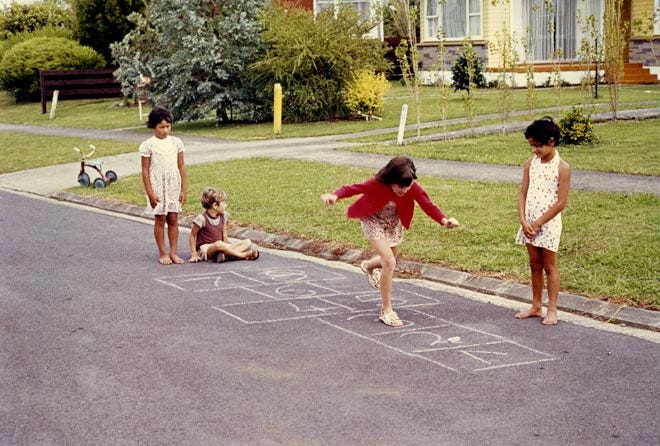
Childhood is a training ground. It’s where we learn to be strong, resilient and independent, for without these qualities, we cannot properly make the transition to adulthood.
Before the internet and smartphones, children were free to roam, explore, learn, make mistakes and grow. Without the technological umbilical cord of round-the-clock connectivity, and not yet trapped in the bubble-wrap mentality of over-anxious parents, they were autonomous in a way today’s generation could never understand.
Childhood was a glorious time of freedom and self-discovery. It was a paradise that the generation of that time remember fondly, as numerous websites like Recollection Road and Mumsnet attest to – and, indeed, my own book, Life Before the Internet.
Children left for school in the morning and were generally unreachable until they saw their parents again at the end of the day. They therefore had to plan and deal with the vicissitudes of daily life, from missing the bus to running out of money. They had to improvise and make decisions. They became street-smart.
After school, they played for hours in a giant, unsupervised playground known as outside. They took risks, developed self-confidence and resolved conflicts by themselves. When they’d had enough of climbing trees, riding their bicycles or getting up to mischief in the streets, they would gather at each other’s homes and play charades, cards or Monopoly. These games were highly interactive and honed the kids’ social skills; they also taught valuable life lessons like patience, fairness and that losing is part of life.
And during all this seemingly anarchic playtime, parents knew their progeny were somewhere in the neighbourhood and would be back home in time for dinner. And indeed, they were. Giving children a long leash did not, contrary to what some parents today might think, result in a spate of traffic accidents, child abductions or serious injuries.
Have you noticed the common thread across all these childhood activities? Yes, play was intensely social, and children spent their free time talking to other children. Childhood happened in the real world in the company of other children, not glued to a screen, alone in one’s bedroom, with the door closed.
Perhaps not surprisingly, I brought up my own children this way. Before the age of ten, they would walk or cycle to their nearby school. In the afternoon, there were left to their own devices. They were out playing with their friends somewhere and were smart enough not to put their lives in danger. They were always home in time for dinner, suitably hungry and exhausted.
Fast-forward to today’s internet age, and street-smart has given way to screen-smart, with socially awkward children whose main relationship is with their phones. Unsupervised outdoor play and experimentation have been curtailed through over-protective parenting and a fear of lawsuits. Children no longer know how to evaluate risk, navigate dangers or cope with getting hurt. They can always call mom or dad to pick them up or get them out of trouble. And their parents can also call them — and that might well be worse.
This lack of autonomy can even carry over into adulthood. In her book, How to Raise an Adult, Julie Lythcott-Haims, former freshman dean at Stanford University, paints a disconsolate picture of the lack of autonomy of many university students, who rely on their parents for everything from admission and orientation to accommodation — and even fixing their medical appointments.
Of course, the paradise of pre-internet childhood is not an indictment of technology, nor a call for a return to some idyllic past, but an invitation to pause and reflect on how much childhood has changed.
It’s not necessarily hell; but it sure no longer is paradise.
Michael Gentle is the author of Life Before the Internet, a fascinating look back at a slower, simpler time, when Amazon was just a river. For similar articles, click here.
Image from Te Ara Encyclopedia
My kids (8 and 6) and I were flying styrofoam airplanes down at the park about 3/4 mile from our house the other evening and got one of the planes got stuck in a tree. We all walked home where I fetched a ladder and a telescoping pole, and drove back to the park with the items in my pickup.
After retrieving the plane, I offered the boys a chance to walk back together and I would drive ahead of them and wait at the house. This would be their first time doing such a thing. The older one contemplated it a bit and then said yes, while the younger one took a bit of cajoling but eventually agreed to walk back as well.
Last night the eight-year-old wanted to go by himself to the park and fly his plane.
And so it begins...
Beautifully expressed and such an important reminder for all those of us lucky enough to be able to remember such a time, thank you.