
Please, Mr Postman!
The lost art of writing letters

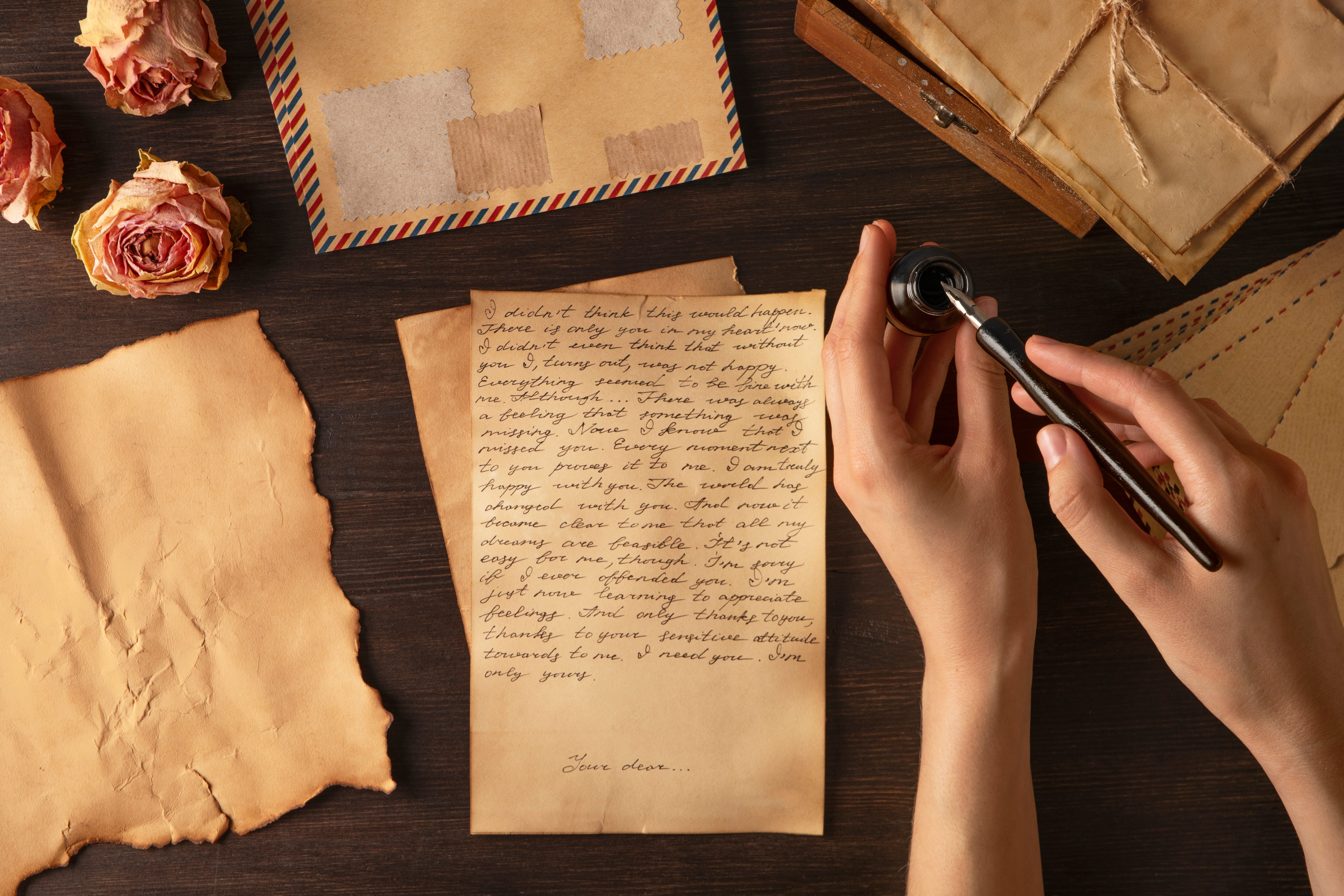
Pen — check! Paper — check! Envelope — check! An hour of free time — check!
If this sounds familiar, then you probably grew up during a time when people still wrote letters. As little as 20 years ago, before screens took over, paper was the primary means of communication. Letters were the lifeblood of society, binding people, communities and business together.
Today, we casually dash off an email or text message in a matter of seconds, hit Send and get a reply a few minutes later. It feels almost impersonal. Indeed, the sheer speed and ease almost detracts from its value.
Before the internet, you kept in touch by writing letters. The process took weeks. Indeed, the very slowness of it all made letters very personal — and very valuable, as they couldn’t just be deleted.
It was a ritual. When it was time to write a letter (and you needed time!) you put a lot of thought into it. It had to be just right, both in message and tone. Your handwriting had to be neat. If you wrote to a sweetheart, you might choose a special kind of paper in shades of blue or pink, sometimes embossed with flowers or other symbols. You might add some hand-drawn hearts and kisses at the bottom — the emojis of the time. Your work done, you would lovingly fold your letter into an envelope, seal it, and go to the Post Office to drop it in the letterbox. A week or two later, you would experience the joy of receiving a reply. All this must be an alien concept to people who’ve only ever known the immediacy of email and text messaging.
In a family comedy I once saw on television, a woman who’s had enough of her smartphone-addicted family pulls the plug and disconnects the whole household. When the teenage daughter ends up losing her boyfriend because she’s no longer present on social media, she wins him back by writing him… a letter! The novelty of the experience for him, and the intimacy he discovers in reading her handwriting, brings them back together again.
Letters were delivered to your home by workers called postmen or mailmen. Although women had also been delivering mail for over a hundred years, their smaller numbers and the societal norms of the times meant that they were never called postwomen or mailwomen. That is still true today, despite the rather cumbersome alternative of mail carrier.
The postman was a big deal in the neighbourhood. His visit was the high point of the day as he dropped by with his precious cargo of bills, bank statements, examination results, university admissions, letters from friends and family, and love letters from that special someone. You typically knew his name and often took the time to exchange gossip and small-talk with him.
In TV sitcoms, the postman might be the grey-haired elder dispensing fatherly advice to moms and kids (The Brady Bunch), or the lazy, scheming Newman with a permanent grudge against his downstairs neighbour (Seinfeld). Today, your Amazon delivery rider on his scooter doesn’t even show up in the script.
Popular music was full of songs about people writing letters to each other — love letters, break-up letters, make-up letters and come-back letters. Some of my favourites when I was growing up were The letter in 1967, sung by the Box Tops; Take a letter, Maria in 1969, sung by R.B. Greaves; and Please, Mr Postman in 1975, sung by The Carpenters.
When you got home from work or from school, the first thing you usually did was go through the pile of letters on the hallway table to see if there was anything for you. A simple glance at the writing on the envelope was sometimes enough to let you know who a letter was from. I still recall my parents’ distinctive handwriting, and the feelings they evoked. I also remember vividly the handwriting of the love letters I used to receive in my teens, and the emotional excitement they triggered. Today, I would have difficulty identifying the handwriting of my own children because our communication has always been digital.
Many young people also had international pen pals, which was an ideal way to learn more about other cultures and countries. Such relationships between people who’d never met were based entirely on the exchange of letters.
Today, we delete our correspondence. But back then, we often kept it, sometimes for years. The really personal letters might be lovingly stored in a box on a shelf somewhere, always ready for a walk down memory lane. Contrast that with the emotionally poor experience that reading an archived email on your phone or computer would be, since Times New Roman is hardly likely to evoke nostalgia.
Such was the value of handwritten communication.
Michael Gentle is the author of Life Before the Internet, a fascinating look back at a slower, simpler time, when Amazon was just a river. For similar articles, click here.
Image by Freepik